Dr. nancy morales
Scholar, Educator, Native Ethnographer, Organizer
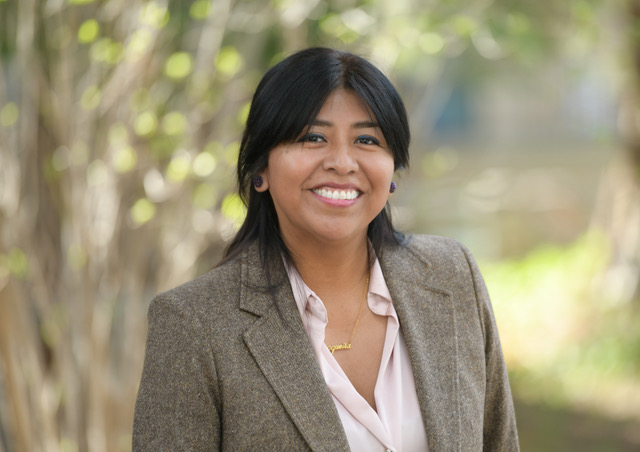
Dr. Nancy Morales (she/her) is a Visiting Scholar at the Chicano Studies Institute at UC Santa Barbara.
About
Dr. Morales is an Indigiqueer (Zapotec) feminist scholar, educator, writer and Native ethnographer. She earned her doctoral degree from the Department of Feminist Studies at UC Santa Barbara. She employs contemporary Black and Native/Indigenous feminist theories of gender and sexuality, belonging, and settler colonialism to examine new generations of Indigenous women and Indigiqueer youth’s deployment of different practices of Indigenous governance to build Indigenous transborder communities in California’s Central Coast and Central Valley. The UC Office of the President, American Association of University Women, UC-Hispanic Serving Institute Pre-Professoriate Fellowship, and multiple internal research fellowships and grants from UC Santa Barbara have supported her research.
Before completing her doctoral degree, she earned a Master’s in Public Affairs with a minor in Latinx Studies at Cornell University. Her research focused on the National Day Laborer Organizing Network (NDLON) and the National Domestic Workers’ Alliance (NDWA), exploring how race and gender become necessary for understanding workers’ struggles within the immigration, labor, and civil rights movements. Then was a lecturer at the Center for the Study of Culture, Race, and Ethnicity at Ithaca College. As a first-generation Zapotec queer scholar and a proud non-traditional student, her anticolonial pedagogies are collaborative and transform spaces of learning within and outside higher education.
She was a UC President’s Postdoctoral Fellow and past member of the Oaxaqueñx Youth Encuentro group. She is a co-founder of the Collective of Pueblos Originarios in Diaspora, a student campus organization at UC Santa Barbara that aims to heighten the visibility of diasporic Indigenous (Mixtec, Zapotec, and Maya) students on campus. Overall, her goal is to pursue various forms of scholarly activism that are rooted in the struggle and commitment to intergenerational healing from historical trauma and envisioning Indigenous futures.
 Nancy Morales, Ph.D.